
What Are Veneers?
Dental veneers are thin, custom-made shells or layers (usually crafted from porcelain or composite resin) that are bonded to the front surface of the teeth. Veneers are designed to protect the teeth from further damage and can improve the appearance of teeth by enhancing their shape, shade, size, and alignment. They are a common solution for patients with chipped, discolored, worn down, or uneven teeth who are looking for a long-lasting smile makeover.
What Issues Can a Porcelain Dental Veneer Fix?
Cosmetic veneers treatment are used by dentists to:
- Modify the shape, colour, or length of your tooth
- Fix a chipped tooth
- Restore worn out teeth
- Cover up stains caused by tea, coffee, wine, and prescription medications
- Replace stained composite fillings
The Veneer Procedure
- Consultation & Assessment — Your dentist will evaluate your oral health by examining your teeth and taking diagnostic records such as photographs, radiographs and a 3D digital scan. We discuss your aesthetic goals ensuring that they align with what can be achieved clinically, and determine if veneers are appropriate for you.
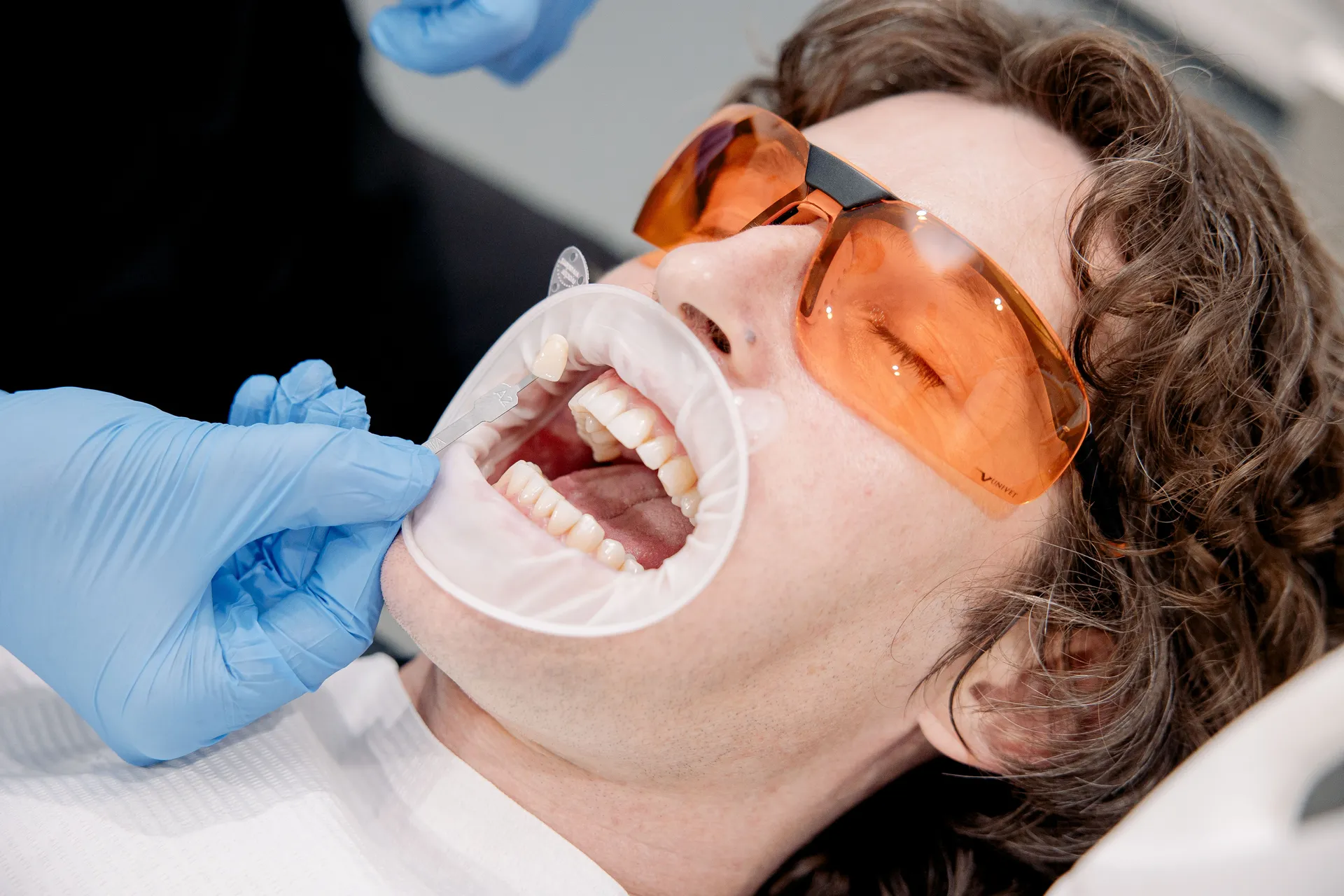
- Trial Smile — In collaboration with the dentist, you will establish your ideal smile design which can be trialed by you in the clinic. It is very important to provide your feedback at this appointment as your veneers will be based off this design.
- Tooth Preparation — A small amount of enamel (usually less than 1 mm) is removed from the tooth surface to create space for the veneer. In some cases, minimal-prep or no-prep veneers may be an option which will be determined by the dentist.
- Impressions & Design — Your dentist will take impressions and/or digital scans of your teeth. These are sent to an Australian dental laboratory where your veneers are custom-crafted.
- Temporary Veneers — Temporary veneers may be placed while you wait for the final restorations.
- Bonding — Once the veneers are ready, your dentist will place them on your teeth, verifying the fit and appearance, and then bond them permanently using dental cement.
Risks and Complications
While veneers are generally safe and effective, patients should be aware of the possible risks and complications that can occur in any dental procedure:
- Irreversible Procedure — When the dentist removes the enamel it is permanent so once you commit to veneers, you will always need some form of restoration on those teeth.
- Tooth Sensitivity — With the removal of enamel, some patients experience temporary or long-term sensitivity to hot and cold after the procedure.
- Gum Irritation — To ensure an intimate contact between the tooth and the veneer, it can be very close to the gums. As a result, the gum tissues may have minor inflammation and discomfort which should lessen over time. It is also important to maintain a good oral hygiene routine to prevent gum inflammation from occurring at a later stage.
- Color Mismatch — The colour of the veneers are final and long lasting. However, the natural teeth change color over time which can result in a colour mismatch. Managing factors such as stain-processing foods/beverages, smoking and certain medical conditions along with regular check ups and cleans can help keep your veneers looking healthy for longer.
- Chipping or Fracture — Although porcelain is durable, veneers can chip or fracture if subjected to excessive force, such as teeth grinding (bruxism) or biting hard objects. Early detection of these underlying issues at the regular dental check up can prevent this from occurring. In some instances, a night guard is recommended after the veneer procedure.
- Dislodgement — In rare cases, veneers may debond or fall off, requiring rebonding or replacement.
- Decay Under Veneers — If proper oral hygiene is not maintained, decay can still develop in the natural tooth beneath the veneer.
- Nerve Irritation — In some cases, enamel reduction may lead to irritation of the tooth's nerve, potentially resulting in the need for root canal therapy.
- Gum Recession — Over time, the elasticity of the gum can reduce leading to gum shrinkage. This will reveal the edge of the veneer.
Is the Procedure Right for You?
Veneers can offer outstanding cosmetic results, but they are not suitable for everyone. Patients with severe tooth decay, gum disease, or insufficient enamel may not be good candidates. Additionally, individuals who grind their teeth may require protective measures, such as a nightguard, to prevent veneer damage.
Dental veneers are a highly effective treatment for transforming your smile, but they are a long-term commitment and carry certain risks. By understanding the potential complications and discussing them openly with your dentist, you can make an informed decision and achieve results that balance both aesthetics and long-term oral health. If you are considering veneers, schedule a consultation with our team at My Local Dentists to explore your options and find out whether this procedure is the best choice for your smile.